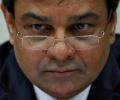
Under Urjit Patel, the then RBI Governor, the central bank had a habit of making complete about-turns on various issues, including electoral bonds and digital payments, former finance secretary Subash Chandra Garg said in his book titled 'We Also Make Policy: An Insider's Account of How the Finance Ministry Functions.' Citing some instances of about-turns by the then RBI Governor Patel, Garg in his book said, RBI had done so on the electoral bond issue and it had so in case of setting up of Payments Regulatory Board (PRB). RBI also made unilateral decisions like ordering complete data localization for participation in the payment system, Garg wrote in the book which will hit the stands on October 1.
Patel, 55, who took over as the 24th Governor of the central bank on September 5, 2016, had the shortest tenure since 1992.
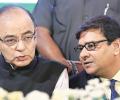
Patel, who headed the RBI from September 2016 till his sudden resignation in December 2018, says in his book thta the government seemed to lose enthusiasm for the new bankruptcy law in the middle of the year he left the central bank. Though Patel does not name anybody in the book, the mid-2018 period he refers to is the time when Piyush Goyal held temporary charge of the finance ministry between May and August.

As deputy governor, Patel headed the RBI panel to draft the monetary policy report, which became the basis of the ongoing reforms at the apex bank

The agitated workers waved black flags and chanted slogans against him.

Heading to the third year, will Urjit Patel be busy firefighting a currency crisis? Almost no governor of the RBI managed to evade it and Patel perhaps knows it.
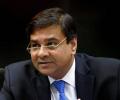
A 10-hour RBI central board meeting, on November 19, decides to set up a panel on the economic capital framework for the central bank and directs it to give forbearances to small businesses.
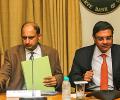
'It is likely the government may opt for an IAS officer.' 'For the government, an IAS officer will be more easy to deal with,' notes A K Bhattacharya.

He will take the place of Subir Gokarn, who was in-charge of the monetary policy department, has retired.

Patel urges government to rein in borrowings, inflation
This time the all-powerful interest-rate setting panel, whose constitution was notified by the government on Thursday, will take call on interest rate. But that's not the only change. The Reserve Bank of India has also decided to change the timing of announcement of its policy review, due next Tuesday, to mid-afternoon.
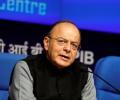
Highly-placed sources in the government say that none of the senior ministers had any inkling of Patel's resignation

The meeting came amid a face-off between the central bank and the finance ministry over issues ranging from appropriate size of reserves that RBI must maintain to ease of lending norms to step up growth in an election year.

The fake handle was opened in June this year but was not used to tweet anything before August 20.

The government on Monday appointed Revenue Secretary Sanjay Malhotra as the 26th Governor of the Reserve Bank of India. The Appointments Committee of the Cabinet cleared Malhotra's name, who has been appointed as the RBI Governor for three years, starting Wednesday. Malhotra, a 1990 Batch Rajasthan Cadre IAS Officer, will replace Shaktikanta Das, whose tenure ends on Tuesday (December 10, 2024).

'Urjit Patel's appointment is a right decision and in the interest of the country.'
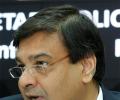
Chetan Ghate, Pami Dua and Ravindra Dholakia have been appointed for 4 years
'When a soldier becomes a king, he better be a king. He should now just forget the past and move beyond continuity. He should catch the potential of India's moment and play a leader's role,' says Vallabh Bhansali of Enam Group.
Unless Dr Urjit Patel starts clearing the balance sheets of banks, the investment cycle will not start. Unless the clog in the drain is cleared, further lending cannot happen. If further lending doesn't happen, the investment cycle also will not happen, writes M R Venkatesh.

The RBI governor-designate may be economical with spoken words, but is known for his sharp and critical writings

The RBI governor, who made a presentation about the state of the economy as well about the world economy to the 31-member Parliamentary Standing Committee on Finance, stayed clear of controversial questions like government invoking special powers.

"I think, this is something that all Indians should be concerned about because strength of our institutions is really important for our growth, sustainable growth and equity in the economy," said Rajan.

RBI's current Deputy Governor Urjit Patel got 3-year extension in January.
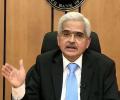
Reserve Bank Governor Shaktikanta Das on Tuesday said the fiscal-monetary coordination was at its best during the last six years even as he thanked Prime Minister Narendra Modi for giving the opportunity to head the monetary authority of the country. Das, in a series of posts on X, on his last day of his six-year term as RBI Governor, also thanked the Finance Minister, various stakeholders and his colleagues at the central bank.
The resignation is sure to create more political firestorms for the government as it comes on the eve of the winter session of Parliament where the Opposition has already made it clear to the treasury benches that infringing on the RBI autonomy would be a big talking point for them.
The RBI Governor received the email on February 23 in which the sender threatened to harm Patel and his family if he did not quit, a police official said.
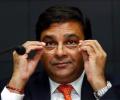
Various global and domestic factors had a sizable impact on the performance of the Indian markets

Rajan said that even though inflation has breached the 6 per cent mark as against the RBI target of getting it down to 5 per cent by March 2017, the price rise scenario will ebb in future

His tweets led to his followers proclaiming that he was backing Patel's appointment
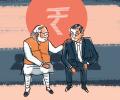
'India's economic fundamentals are much too strong to be affected by his resignation,' says B S Raghavan.
In his first comments after resigning as RBI governor on December 10 last year amid sharp differences with the government, Patel said banks indulged in over-lending, while the government did not "fully play" its role, and also conceded that the regulator should have acted earlier.

'During the transition process, we have some control over the withdrawals.' 'In terms of your wealth, the money in your deposit account is where it is.'

RBI lowered economic growth for the current fiscal to 6.9 per cent from the previously projected 7.1 per cent, but saw it bouncing back in a big way to 7.4 per cent in 2017-18.

"Patel's resignation will shake foreign and domestic trust in the RBI's autonomy and shows that a red line has been crossed."
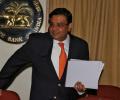
Fitch said the full implications of Patel's resignation will only become clearer once there is some indication of the RBI's policy approach under his replacement, Shaktikanta Das
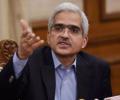
He will be the first bureaucrat to head the central bank in almost five years.

Tension between the government, specially the finance ministry, and RBI is as old as the central bank itself.

The first task before him is to get used to the idea of working with the Monetary Policy Committee
'RBI and the economy will gain tremendously from Urjit Patel's experience in both private and public sectors'
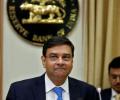
Governor Urjit Patel and his deputies spoke to the media about the central bank's decision to raise the repo rate.
 © 2026 Rediff.com - Advertise with us - Disclaimer - Privacy Policy - Sitemap - Feedback - About us - Terms of use - Grievances